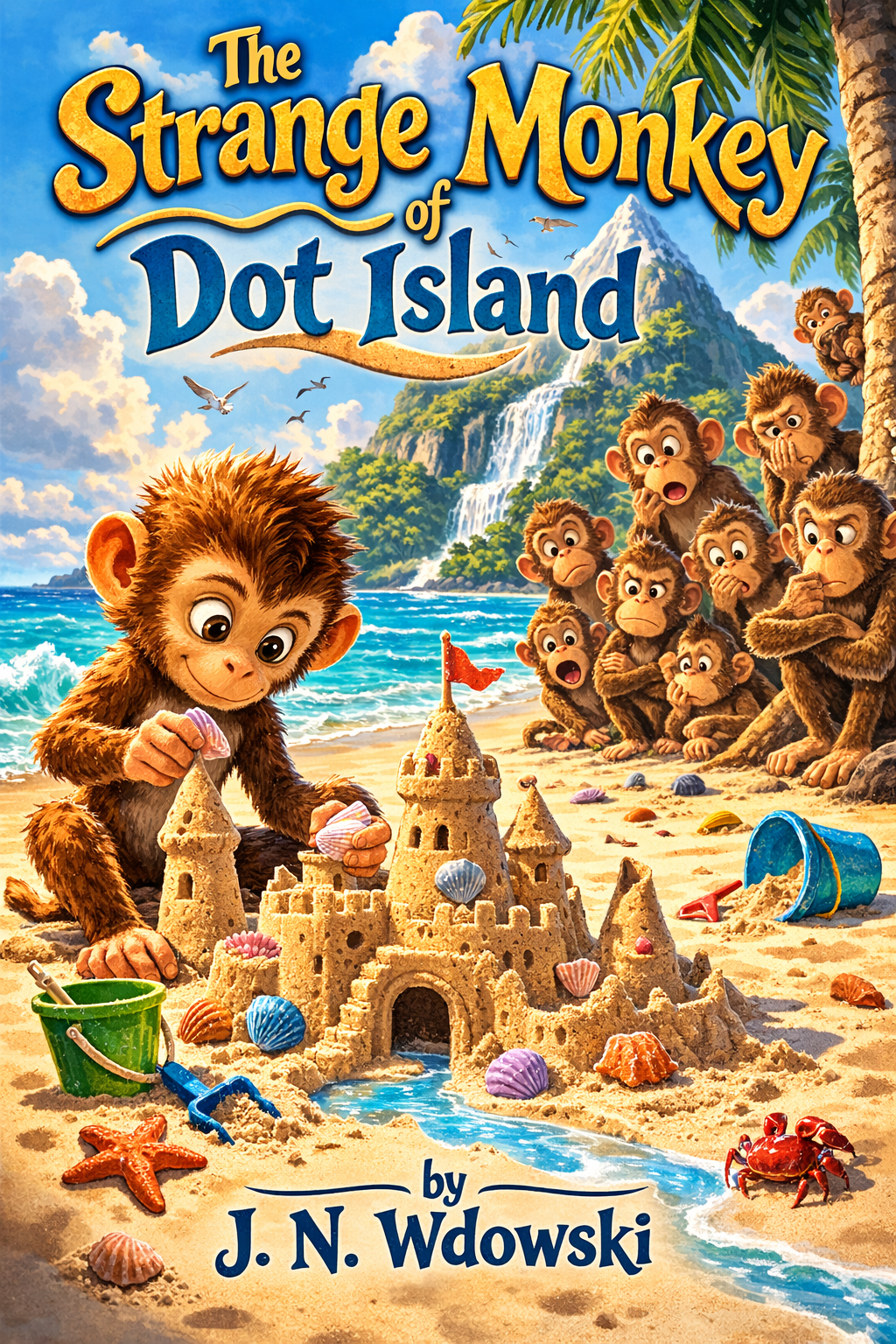

The Strange Monkey of Dot Island
By
J. N. Wdowski
If Dot Island was on a map, it would look like a dot. It appeared so much like a small dot that when the map makers analyzed satellite photos of the Earth, they mistook Dot Island for a mere speck of dirt on the image, leading to Dot Island never being recorded on any map.
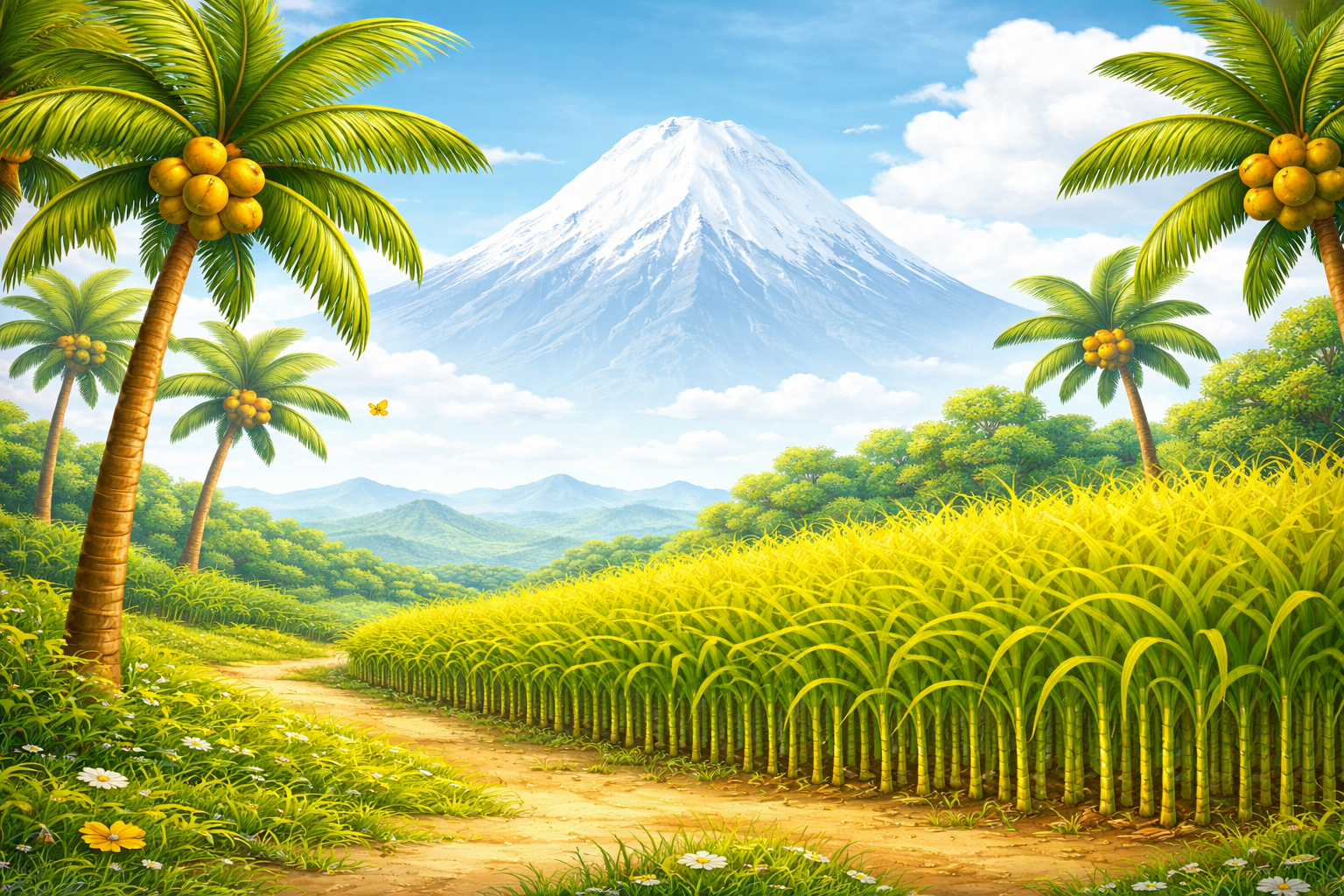
If someone were to approach Dot Island from the sea, one would see an extremely large mountain rising from the ocean floor straight into the clouds. The single mountain of Dot Island was so tall that even in summer the peak was always covered in white snow.
Surrounding the upper section of the mountain, below the snow, were mighty pine trees. Below the pine trees was a ring of leaf bearing trees that would change into many colors every fall.
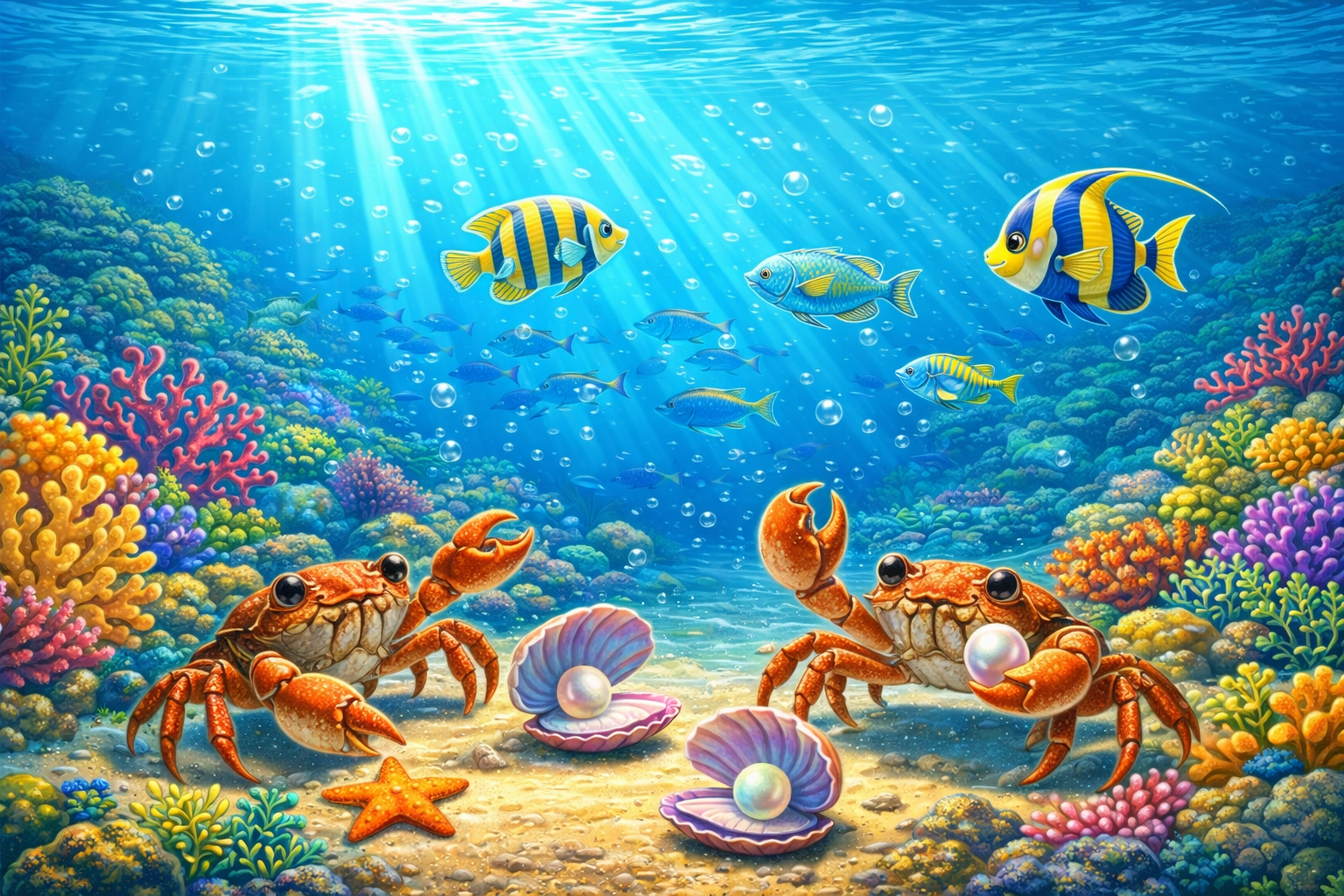
Where the ocean met the shore, all around the mountain, was tropical; with palm trees, orange trees, lemon trees, coconut trees, and sugar cane. Fresh clean water streamed down the north and south sides of the mountain into the ocean. The ocean around Dot Island was teaming with schools of fish, crabs, oysters, and more.
Not a single person had ever set foot on Dot Island. Ringing the island was a large coral reef preventing any ships from getting near its golden sand beaches. That is, if any ship would sail close enough to even see the island. It was hundreds of miles from any sea lanes.
On this island was a very large community of monkeys that had lived there even before the first words were ever written on paper. None of the monkeys knew how they, or any of the animals, had arrived on the island. No other islands or lands could be seen on the horizon in any direction. The monkey's of Dot Island lived day by day, they were never curious about anything. They never stared up at the stars or wondered what the stars were. They never imagined that anything or anyone else could be living beyond their horizon. For them Dot Island was the whole world; never changing, always the same.
Life on Dot Island was good. The monkeys lived a care free life. They had no natural enemies and the temperature was always perfect. If it did rain they would merely take cover under the large palm trees near the beach or take shelter in the trees on the mountain side. Clouds rarely blocked the sun or blue sky. Clouds on the most part would only gather around the mountain’s peak, gently snowing cold crystal flakes upon its pointy top.
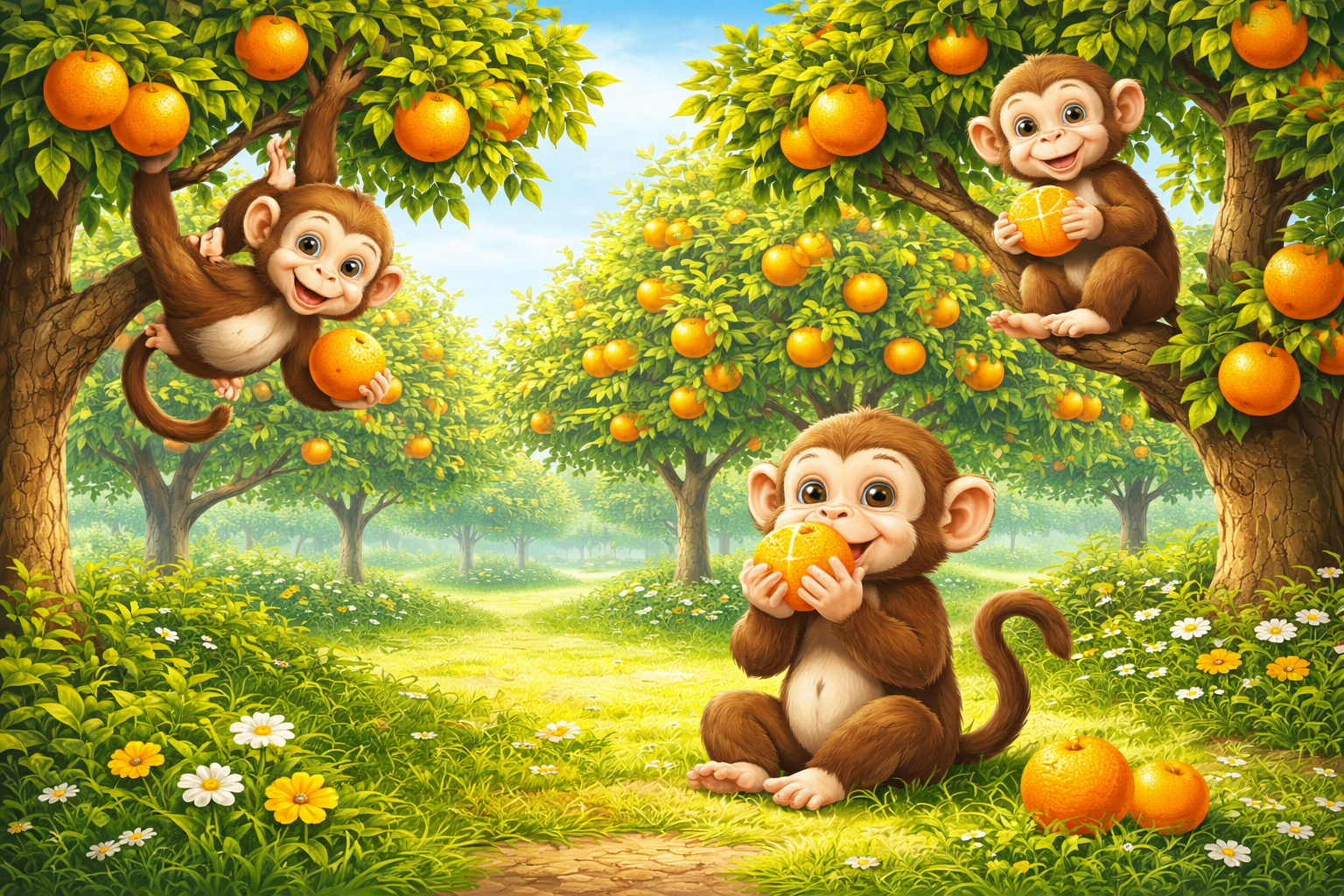
As far back as the oldest monkeys could remember they always did everything as a group. In the middle level of the mountain there were blue berries and raspberries to be found. Food seemed always ripe for the picking. They all woke each day when the sun rose from the east. Each day they would gather berries to eat for breakfast. Each day they would migrate down to the beach to run around and play. Each day they would stop playing when the sun was at its highest point in the sky; to pick oranges from the trees. Each day, after having lunch, they would play until the sun was just about to begin dipping behind the western horizon. Each day they would gather a few more oranges and begin their migration back up the mountain. Each day after eating the oranges, they would groom each other before retiring into the trees to sleep for the night.
The next morning they would do everything exactly the same. Day after day, week after week, month after month, year after year, generation after generation, nothing in their lives ever changed. They functioned like a clock on an island without clocks.
Even though they had sugarcane on the island they would never eat it. They felt the sugarcane was too sweet. They also would never eat the lemons, feeling the lemons were too sour. None of them could figure out how to open the hard coconut shells, so they never tried the coconuts. They were satisfied only eating oranges, blue berries, and raspberries, for they were all good foods, none of them desired anything different or anything more.
One year a monkey was born that would change everything on the island. From the very beginning his parents knew their son was different from the other baby monkeys. He rarely cried for his mother, and was very content to play by himself. The other baby monkeys were always clinging to their mothers. They would ride on their mothers' backs, or hang from under their mothers' bellies.
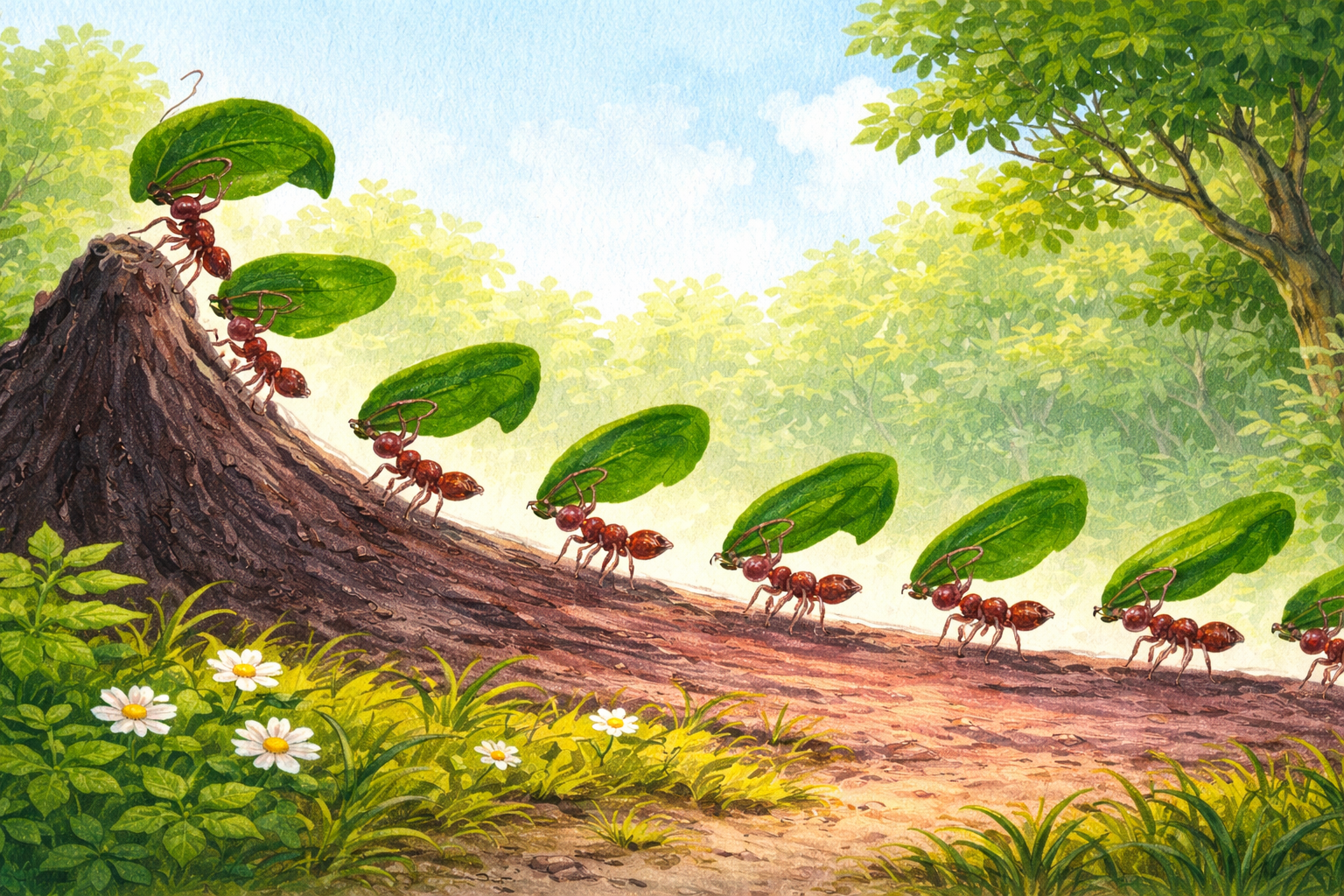
This young monkey seemed very happy to walk along side his mother. He would enjoy being able to stop where and when he wanted to, to explore his world. For example one day he spent hours just watching worker ants moving food into their anthill. He found it very interesting to watch them as they lined up, one after another; carrying leaves twice their size into their anthill.
The other monkeys his age found no interest in watching ants. They would all rather hang onto their mothers, and be feed berries. The young monkey would pick his own berries. He would not eat when all the other monkeys ate. He would eat when he was hungry, which was not always the same time as the others. The group felt this was very strange. They were so use to always doing everything the same, at the same time; they could not understand the little strange monkey. He thought they were not that different than the ants he enjoyed watching. As interesting as he found the ants, he didn't want to be like an ant; mindless and only following the one in front of him.
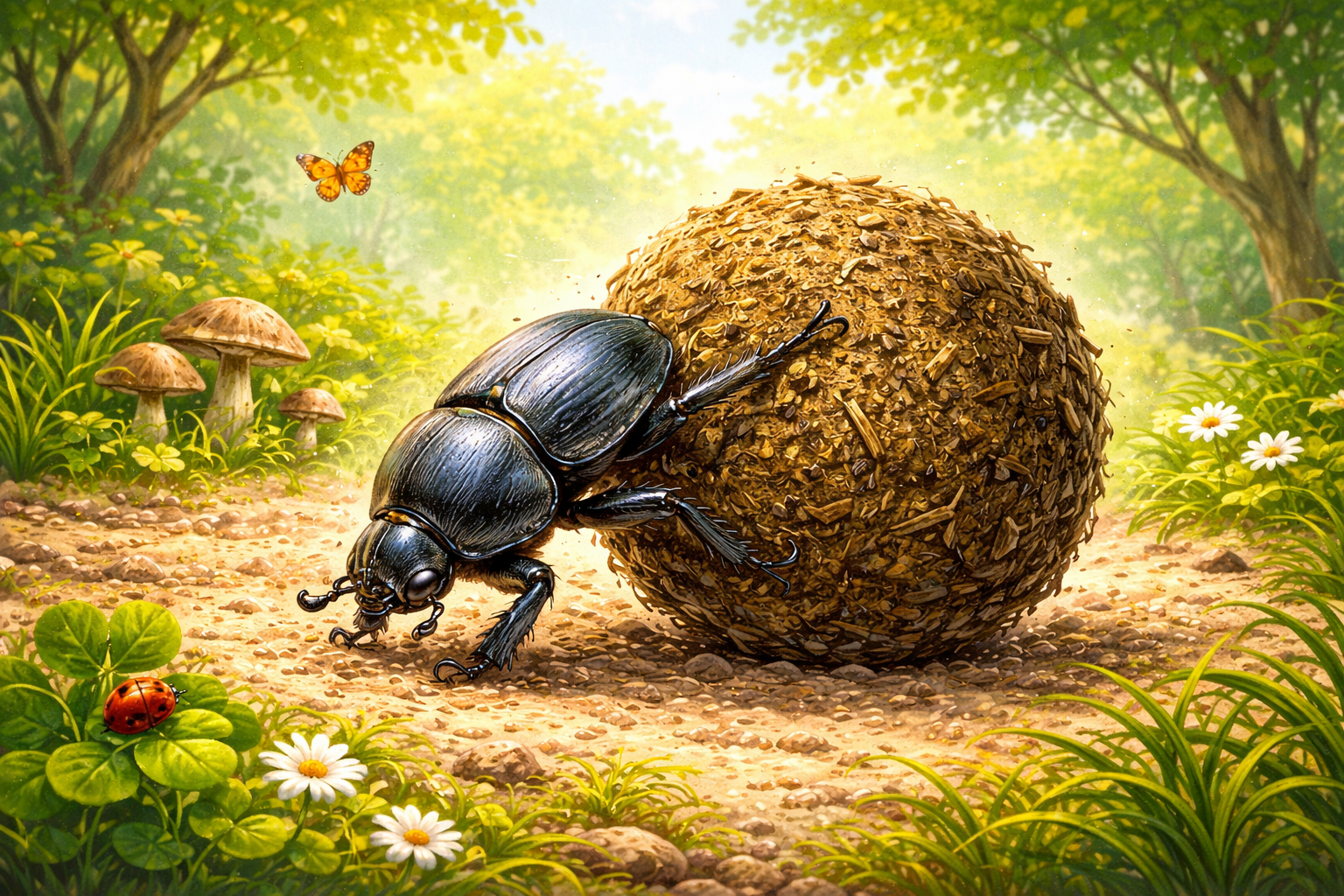
One day he spent a whole afternoon watching dung beetles roll balls of dung into their tunnels for their young to feed and grow on. He found it amazing how the dung beetles could roll something fifty times heavier than themselves.
To continue Download the complete book.